EV charging - 1 MW / 2 MWh
- 50 kWGrid connection1 MW / 2 MWhCapacity
- 1.3 MWpSolar array10x G-MAXEquipment
Project Overview
A fleet depot delivering a megawatt of charging power across eight points, on a grid connection rated at 50 kW.
The operator runs an electric vehicle fleet and needed to expand charging at its depot. The connection serving the site was limited to 50 kW, a long way below what the fleet required. Reinforcing it was possible, but the cost was significant and the timetable belonged to the network operator rather than to the business.
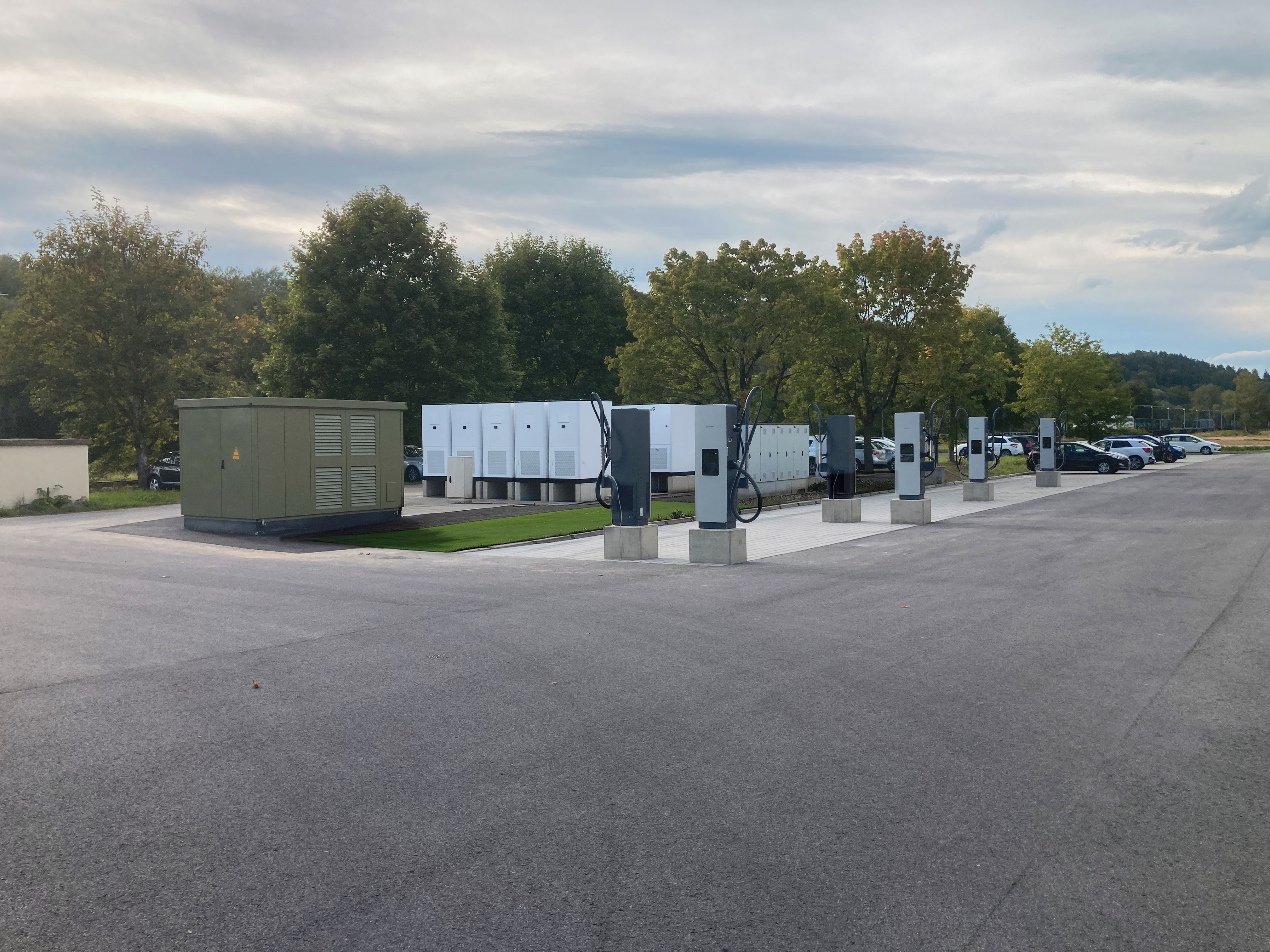
The hub was built around what could be installed on site instead. Ten NGEN G-MAX units provide 1 MW of power and 2 MWh of capacity, and a 1.3 MWp solar array supplies the site directly. Eight charging points now share 1 MW of charging capacity, twenty times what the connection alone would carry.
The Challenge
What limits a charging hub is almost never the chargers. It is the connection behind them.
Charging hardware is the straightforward part of a fleet depot. Power is not. A charger rated at 150 kW needs 150 kW standing behind it, and the connection is whatever the network operator says it is.
Raising it means an application, a place in a queue, a design, civil works and an invoice. None of those sit on the operator's calendar. A fleet that is buying vehicles this year cannot plan around a connection date it does not control.
That turns the question around. Rather than asking how large a connection the depot needs, the operator asked how much charging power the site could deliver with the connection it already had.
Key outcomes
Three things, working together.
Storage sitting between the connection and the chargers
The G-MAX units fill steadily from the 50 kW connection and from the array, then discharge at up to 1 MW when vehicles plug in. The connection sees a steady trickle. The chargers see a megawatt.
Solar supplying the depot directly
The 1.3 MWp array covers part of the charging demand as it is generated and refills the batteries the rest of the time. Less of the day's energy has to come through the connection at all.
No reinforcement, and no queue
The hub was delivered on the existing connection. The schedule belonged to the operator rather than to the network company, and the cost of a connection upgrade was avoided.
G-MAX is NGEN's commercial and industrial system: the battery units, the power conversion and the control that decides when to fill them and when to draw on them.