Šibenik 2, Croatia - 50 MW / 100 MWh
- 50 MW / 100 MWhCapacityTesla MegapackTechnology
- ŠibenikLocation2026Commissioned
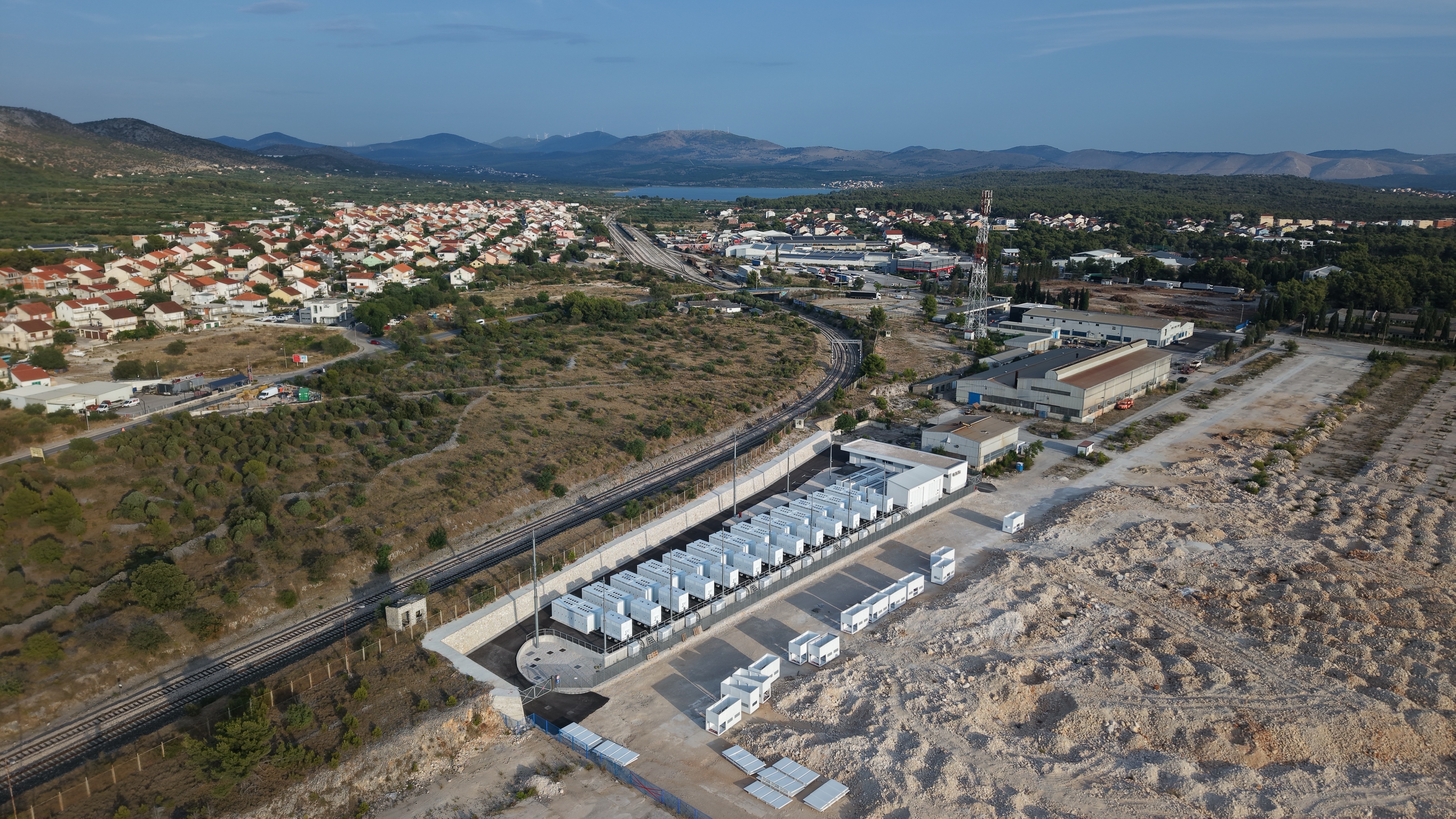
Project Overview
The main phase of the project, which took Šibenik to 60 MW and 120 MWh and made it Croatia's first large standalone battery storage system.
Šibenik 2 adds 50 MW of power and around 100 MWh of storage capacity to the first phase at Ražine. With both phases in operation, the site reaches 60 MW and 120 MWh, a two-hour system connected to the Croatian transmission grid. The complete system comprises 34 Tesla Megapack units with LFP cells.
The second phase is the core of the project. It was designated a strategic project for grid-level energy storage and co-financed through the EU Modernisation Fund. The project as a whole also attracted the EBRD's first equity investment in battery storage.
IE-Energy is the investor and project owner. NGEN is the main EPC and technology partner and optimises the battery on the energy markets and in ancillary services.
The Challenge
Croatia needed a way to balance a grid with a rising share of variable renewables.
Renewable generation is variable, and balancing is what allows it to be used in full. The Croatian government presented the project as giving the transmission system operator HOPS the tools to balance the grid, and as a way to integrate far more renewable generation, particularly in Dalmatia.
Frequency stability is a growing concern. As inverter-connected generation replaces rotating machines, the grid loses the inertia that has traditionally damped sudden changes in frequency, and it needs resources that can respond within milliseconds.
The first 10 MW showed the system working. Scaling to 60 MW on the same site required a connection with room to grow, financing for the larger phase, and commissioning of the remaining 50 MW while the first phase was already trading.
The Solution
Tesla supplies the hardware; NGEN's software decides how the battery operates.
The second phase added the remaining Tesla Megapack units next to the first, on the same site and through the same transformer and transmission connection. At 60 MW and 120 MWh, the system can deliver its full output for about two hours.
The whole system runs on NGEN's technology platform, which gives it access to ancillary services, balancing and intraday trading. On the wholesale market it charges in low-price hours and discharges when prices are higher. On the balancing market it offers fast-response capacity to HOPS and has completed prequalification for automatic and manual frequency restoration reserve (aFRR and mFRR). The platform moves capacity between these markets as prices and system needs change, and never offers the same megawatts to two products at once.
The project also prepares the ground for more advanced grid services. The Croatian Ministry of Economy has noted that it opens the way to virtual inertia, in which the battery's control system emulates the inertial response of the rotating machines in a conventional power plant.
The site is supervised around the clock from NGEN's dispatch centre in Žirovnica, Slovenia.
Key Outcomes
What this project delivers.
Six times larger on the same site
The second phase took the site from 10 MW to 60 MW and from 20 MWh to 120 MWh.
Croatia's first large standalone battery
At 60 MW and 120 MWh, Šibenik is the first large standalone battery storage system in Croatia.
Balancing capacity for HOPS
The system gives the Croatian transmission system operator fast-responding capacity to balance the grid.
A path to virtual inertia
The system lays the groundwork for advanced grid services such as virtual inertia.