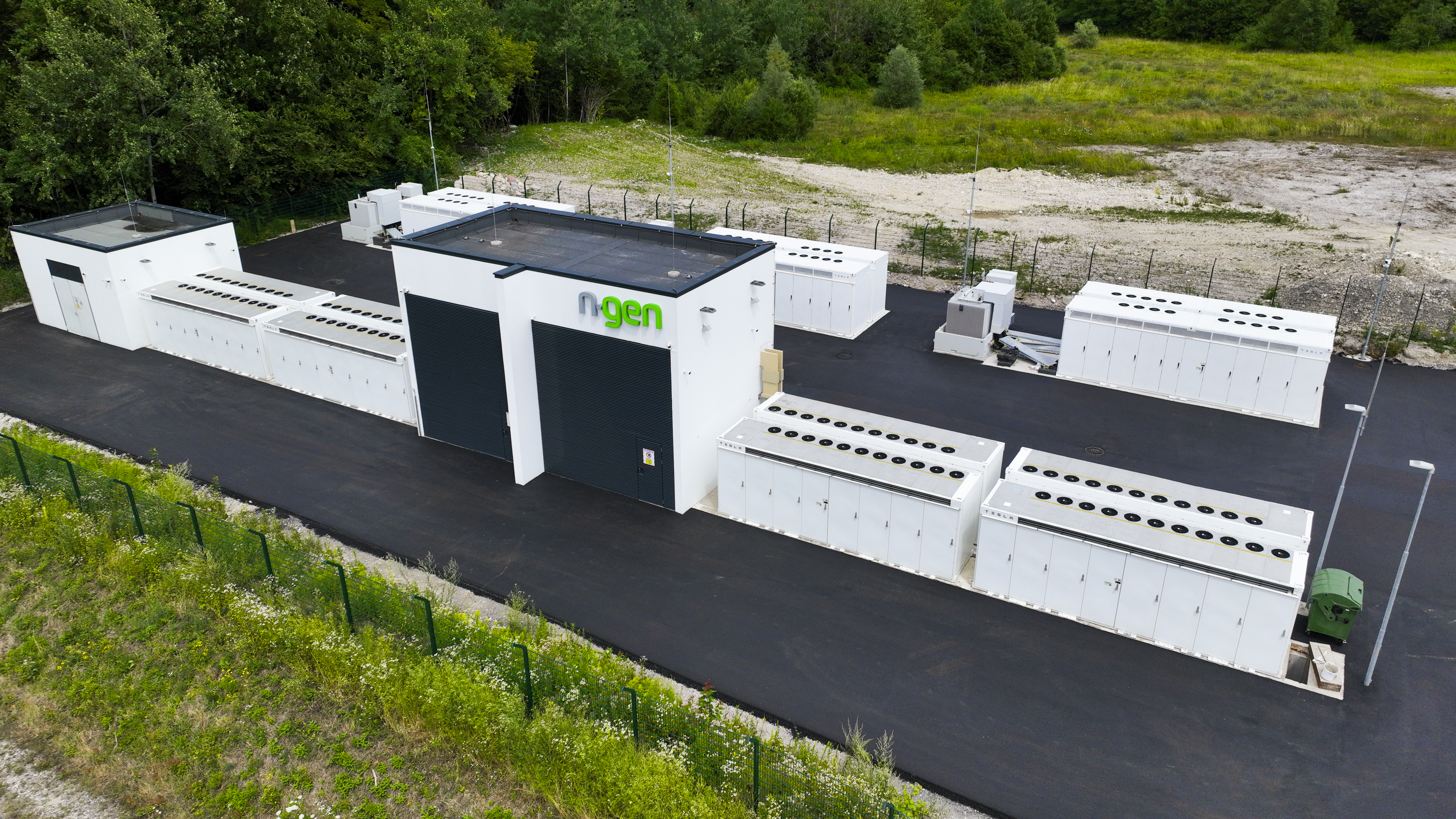
NGEN's Pioneering Battery Storage at the Acroni Site in Jesenice
- 12MW / 24MWhCapacityTesla PowerpackTechnology
- SloveniaLocation2019Commissioned
Project Overview
NGEN's first grid-scale battery, and the project that set the company's software-first approach to energy storage.
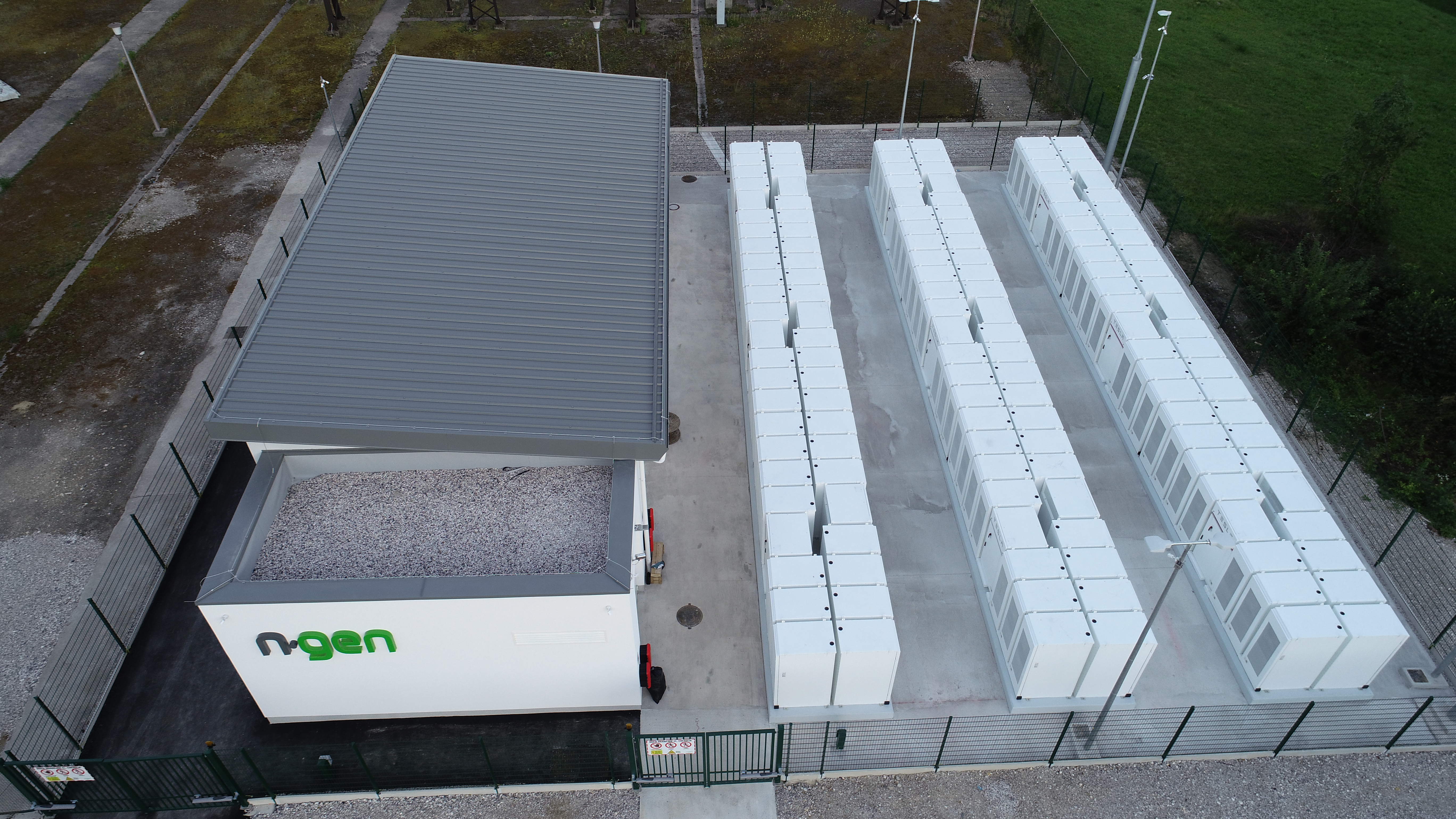
The battery was built in 2019 on a plot next to the SIJ Acroni steelworks in Jesenice, in north-west Slovenia, and opened on 10 October that year. It was the first grid-scale battery in the country and, at the time, the largest Tesla Powerpack installation in Europe. Construction began in April and the first operational tests were finished by the end of August, a little over a year after NGEN was founded.
Jesenice set the pattern for everything that followed. The battery ran on software written in-house from its first day of operation, and it was never operated as a battery on its own. Industrial consumers whose demand could be shifted were managed in the same portfolio, so storage and flexible load answered as one resource. That is the model NGEN has repeated in every market since.
The Challenge
In 2019, Slovenia's grid reserves came almost entirely from conventional power plants. The transition needed something faster and cleaner.
Generation and consumption have to match at every moment. To absorb sudden changes, the Slovenian transmission system operator ELES contracts reserve capacity that must be available around the clock and follow the operator's signal on demand. Conventional generation had always carried that duty. Those plants are dependable, but they change output slowly and they have to be running to be ready.
A battery can do the same work faster and without burning anything. In 2019, though, no battery had qualified to provide it here. NGEN's first project set out to prove the case: that a battery under its own software control could meet ELES's availability requirements as reliably as a power plant.
The Solution
Tesla Powerpack hardware, operated by software NGEN wrote itself. The first battery in the country to deliver secondary reserve.
The site holds 12.6 MW of connected power and 22.2 MWh of capacity, built from Tesla Powerpack units on roughly 800 square metres of ground beside the steelworks. The system is water-cooled and made up of more than two million cells. The hardware sets the limits; the decisions are made by NGEN's platform.
In January 2020, NGEN contracted 14 MW of secondary reserve, aFRR, with ELES. The obligation is demanding. The capacity has to be available in every hour of the year and follow the operator's setpoint when called. The battery does not carry it alone: industrial consumers whose load can be shifted are dispatched in the same portfolio, so storage and demand response answer together. In practice, an early virtual power plant.
The platform connects the battery to the markets and to the grid, forecasts what the system will need, and positions the asset accordingly under continuous supervision from Žirovnica.
Key Outcomes
What this project delivers.
Secondary reserve for ELES
aFRR supplied to the Slovenian transmission system operator since January 2020, a service that had previously come only from conventional generation.
Availability without the emissions
Reserve capacity with the availability expected of a power plant and the response speed of a battery.
Room for more renewables
At launch, NGEN estimated the system would make room for around 250 MW of additional clean generation in Slovenia.
The blueprint for the fleet
The software-first approach proven in Jesenice now runs NGEN's projects in Austria, Poland, Croatia and beyond.
Related projects
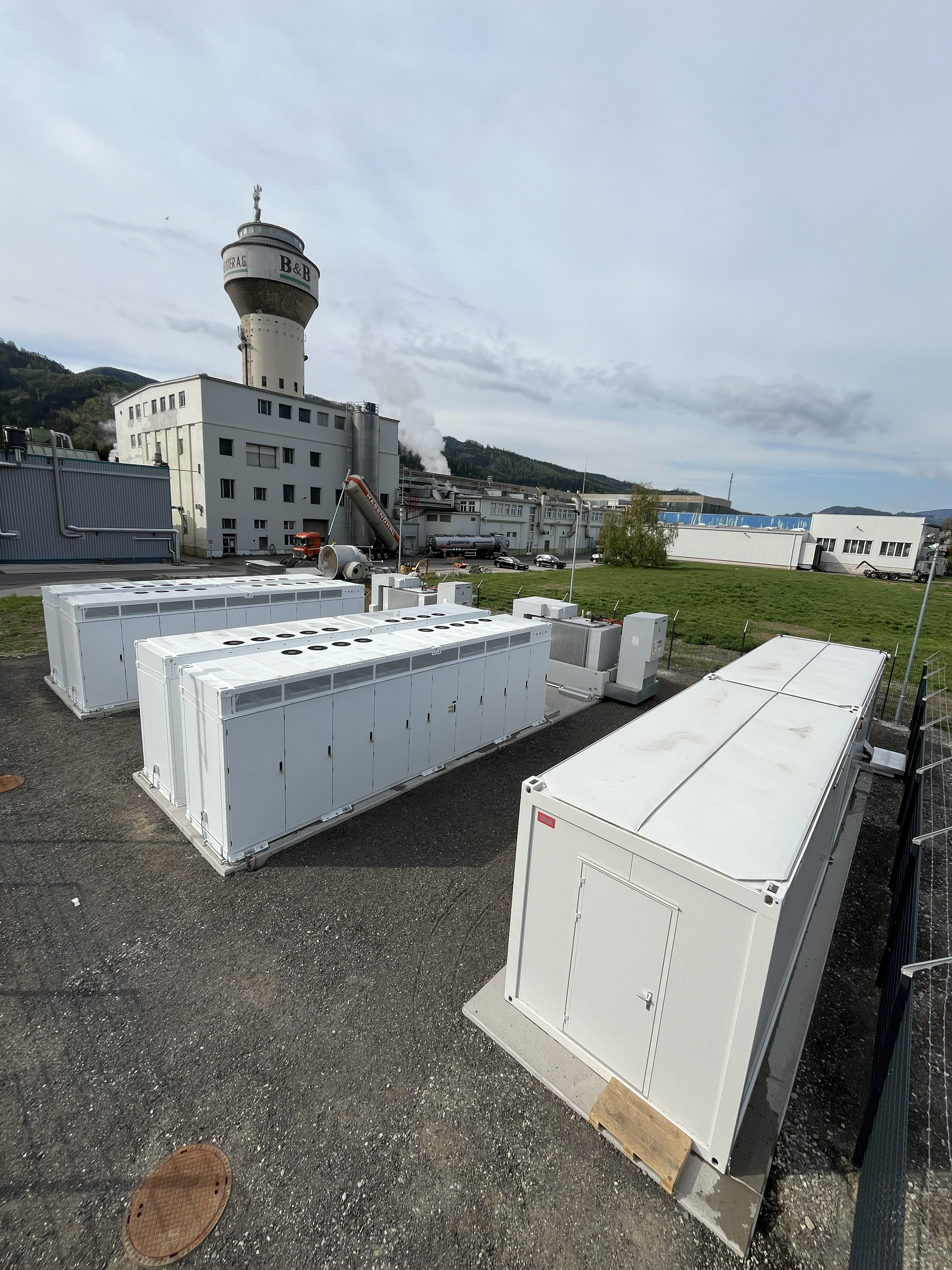
NGEN Deploys 7.7 MW Grid-Scale Battery Storage in Niklasdorf
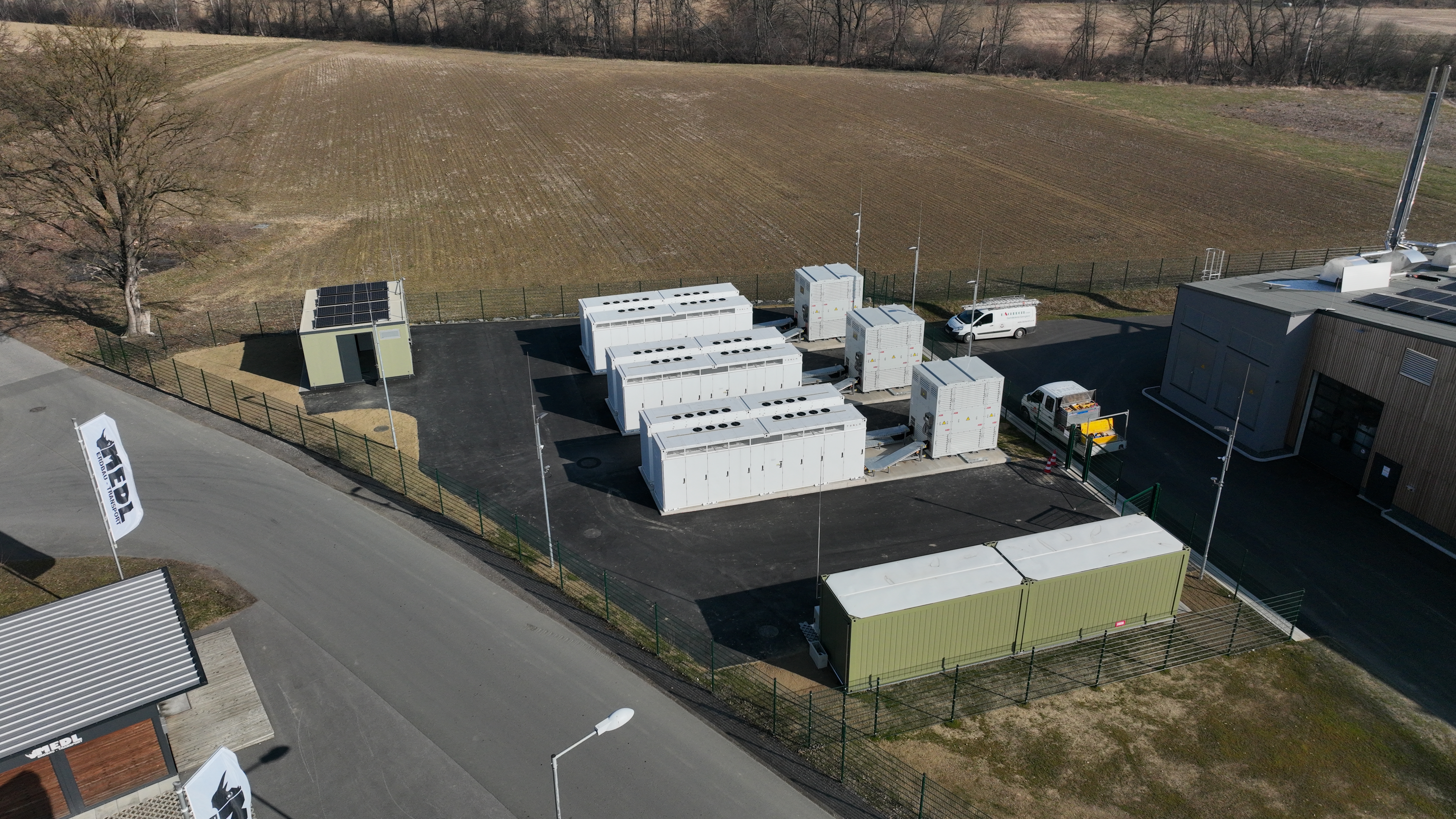
A Boost to Self-Sufficiency for the Municipal Utility in Fürstenfeld
NGEN Doubles One of Austria's Largest Battery Storage in Arnoldstein