Slovenian home - 12 kWp + 23 kWh
- 12 kWp + 23 kWhCapacity€359/yearModelled annual cost
- €2,087/yearModelled annual saving4.7 yearsPayback after subsidy
The household
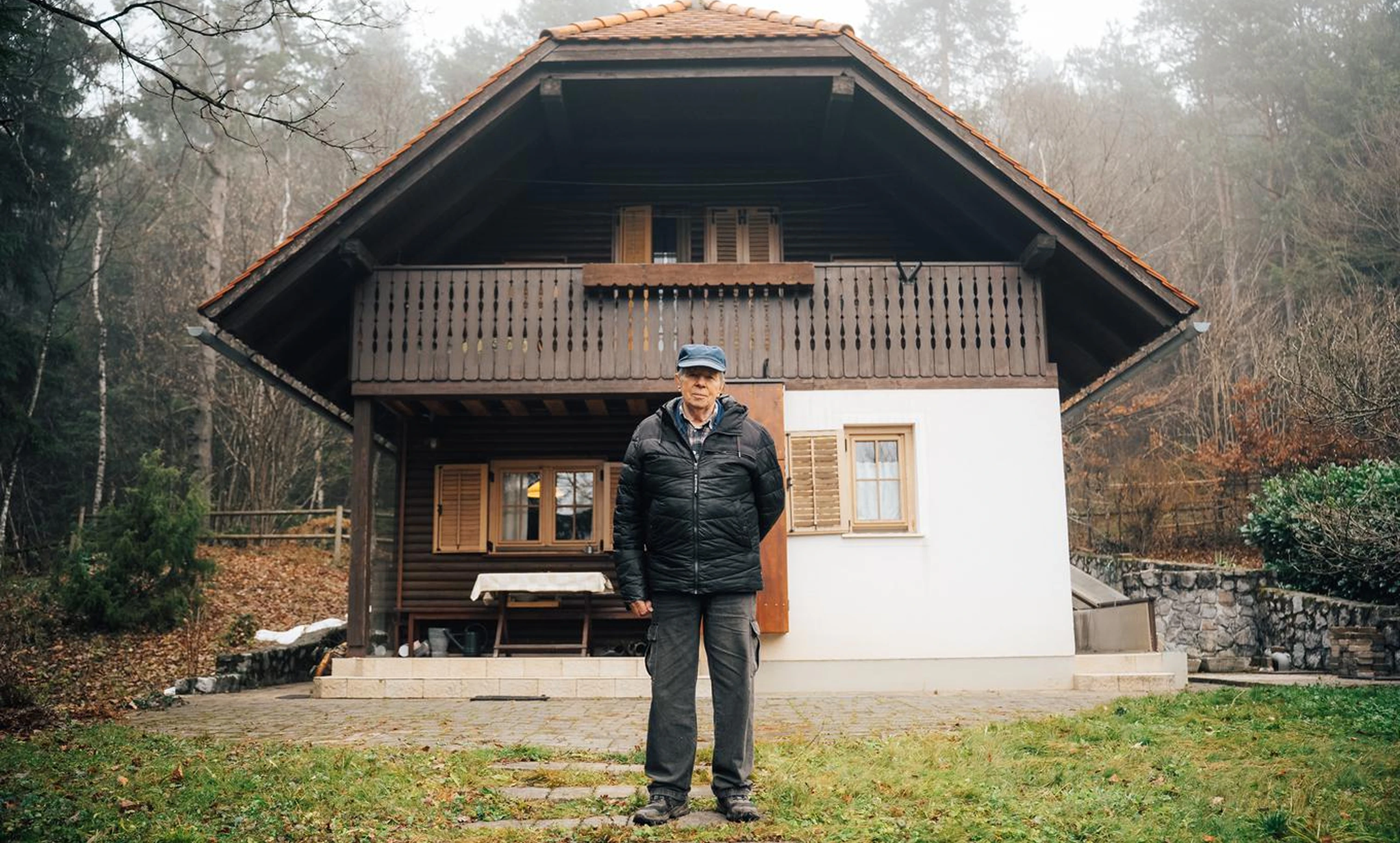
A family home in central Slovenia, heated by a heat pump, using 13,000 kWh of electricity a year. It paid €2,446. The calculation puts it at €359.
That €2,446 is not only the electricity. It also carries the network charge, the billing power charge and the other contributions that appear on every bill. Under the new network tariff, with nothing in the house changing, the same consumption would cost around €2,513.
The Challenge
Panels reduce how much you buy. They do nothing about when you buy it, or how much of it at once.
Over a year this house would generate almost as much electricity as it uses, and would still buy from the grid. The panels produce most in the middle of the day in summer. The household uses most in the evening and through the winter.
The network charge no longer follows consumption alone either. It now also follows the power you draw at any one moment, measured separately in each time block. Run the heat pump, the oven and an EV charger together and you set a peak, and that peak sets the charge for the whole period. This household sat at 9 kW.
Where the Saving Comes From
Three things, working together.
Using your own electricity instead of buying it
The 23 kWh battery holds the daytime surplus for the evening and overnight. The household uses 7,496 kWh of its own production, around 58 per cent of everything the 12 kWp array generates.
Cutting the peak, and with it the network charge
When several large appliances run at once, the battery supplies part of the demand and the meter records a lower peak. Before the investment the household reached 9 kW of billing power in every time block. Afterwards it falls to 3.4 kW in the first and second blocks, the most expensive ones and the lowest the rules allow for a connection of this size. In the cheaper blocks it stays higher, so the saving comes mainly from the expensive blocks. The SPTE/OVE contribution falls away as well.
Offsetting the remainder across the year
On a conventional self-supply arrangement the bill would settle at around €701 a year, a saving of €1,745. On NGEN's Nova doba samooskrbe, electricity sent to the grid is offset against electricity taken back over the whole year: 4,608 kWh at no charge, leaving €359. That is €2,087 saved a year.
SG Connect is what makes these three work as one system rather than as three products bought separately.