justCHARGE: how NGEN manages electric vehicle charging
What is changing at sites with charging stations
The number of electric vehicles in Europe is growing faster than the infrastructure that charges them. For a site owner — a hotel, an office building, a shopping centre or a company with a vehicle fleet — this creates a new operational question: who is allowed to charge, at what price, who invoices it, and who knows whether the charger is working at all.
In practice, these questions are often handled manually. The charger is installed, access is either open or locked with a key, consumption is not measured per user, and billing happens after the fact or not at all. That approach works with one charging point. With five or fifty it breaks down.
Charging infrastructure needs software management in the same way as any other energy asset on site.
What justCHARGE is
justCHARGE is a software platform for managing electric vehicle charging, launched by NGEN in 2023. It covers the full charging cycle: user identification, authorisation, session metering, pricing, payment, and payout to the charge point owner.
The platform is not tied to a single hardware vendor. It works with any charger supporting the OCPP 1.6 or 2.0.1 protocol, which is today's industry standard. A site owner is therefore free to choose equipment, and existing chargers can be brought into the system without replacing hardware.
The platform is used across residential installations, hotels and hospitality venues, office buildings, public car parks and commercial fleets.
For the driver: scan, plug in, charge
The main obstacle in public charging is access rather than technology. A driver arriving at an unfamiliar location usually does not have the right app installed and has no account with the operator.
justCHARGE therefore works without mandatory registration:
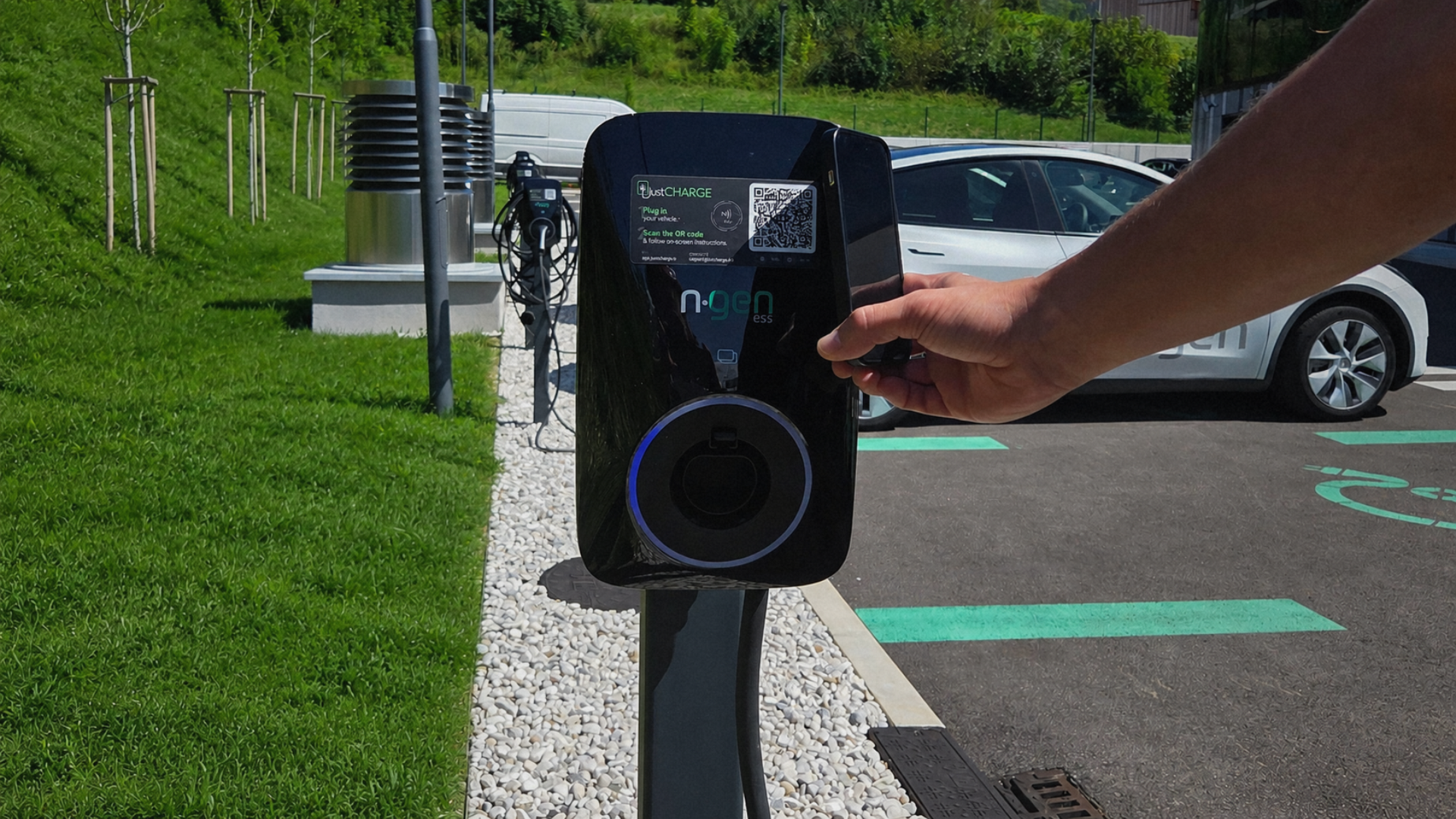
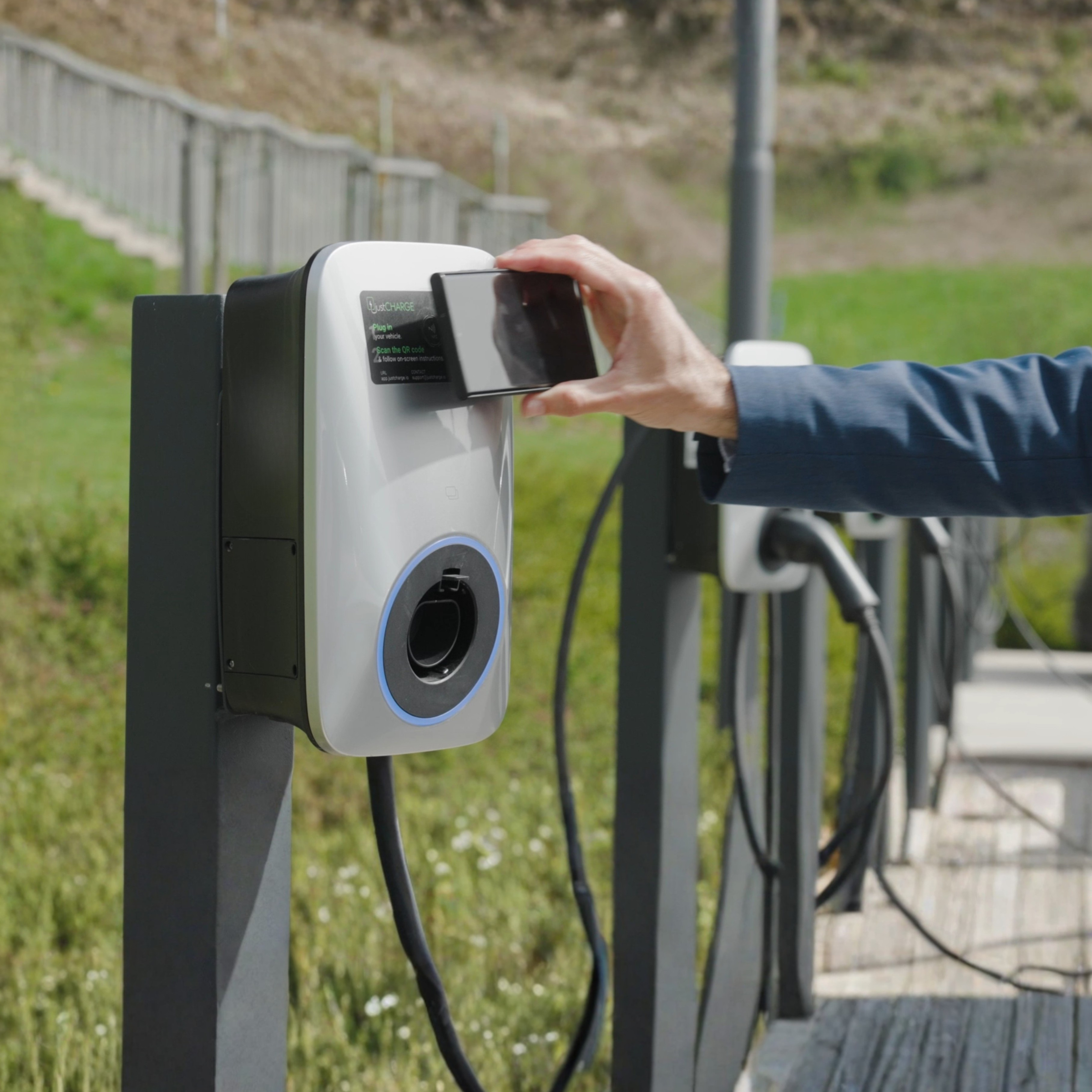
QR code or NFC — the driver scans the code on the charger or taps it with a phone, and the session starts in the web app.
Payment by card, Apple Pay or Google Pay — no prepayment and no hidden charges.
Real-time map — station availability, current prices and charging speeds.
AutoCharge — where the charger supports it, the system recognises a registered user's vehicle on plug-in and starts the session automatically, with no scanning required.
For an occasional user, that is the entire experience. For a regular user, an account adds session history, saved vehicles and stored payment methods.

For the charge point owner: pricing, billing, oversight
On the owner's side the logic is different. A charger has to cover the cost of energy, ideally generate revenue, and create no administrative work.
Own tariffs. The owner sets the price and can differentiate it by user group — public, employees, hotel guests. Prices can follow a weekly schedule, with different rates for specific hours or parts of the day.
Automated billing. Payments are processed without manual intervention and revenue is transferred directly to the owner.
Operational oversight. Visibility into sessions, kilowatt-hours delivered and charger status, including data showing when a charging point was unavailable.
For a hotel, this means charging becomes a guest service with a clear price. For an office building, it means the car park stops being a pure cost item. For a company running vehicles, it means consumption is measured rather than estimated.
Where justCHARGE sits in the NGEN ecosystem
NGEN develops and operates energy systems — from solar plants and battery storage to the SG CONNECT energy management system. Within that scope, electric vehicle charging is one of the controllable loads on a site: large, shiftable in time, and therefore relevant to the site's energy cost.
This is why charging infrastructure makes sense as part of the wider energy management of a location rather than as a separate island. Where generation and storage are present on the same site, charging can be coordinated with available energy and with the limits of the grid connection.
Simplifying charging
Everything in one place